
Zero Trust Security
Never Trust. Always Verify. Everywhere.
One cloud-managed platform. Zero Trust by default. Complete control over users, apps, and devices: from office to remote work.
- 56% lower breach costs
- 3 weeks to deploy
- 1 platform for Zero Trust
The Zero Trust Security Challenge
Organizations recognize that cybersecurity is critical, but traditional approaches no longer suffice.
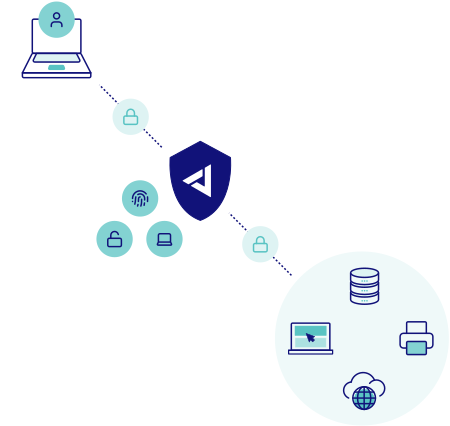
- VPNs feel familiar but grant too much access once connected
- Perimeter security can’t stop lateral movement after a breach
- Multiple tools create complexity and blind spots
- Personal devices and IoT blur security boundaries
- Manual processes can’t keep pace with modern threats
- Compliance requires demonstrable least privilege
The result? Once attackers get in, they move freely across your network.
Verify Every Connection
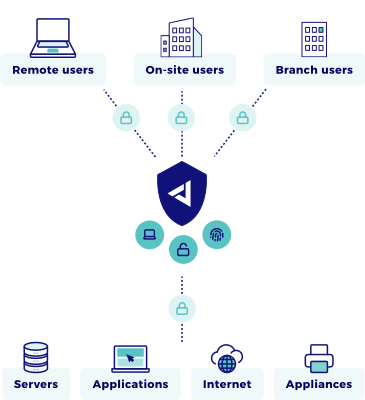
No implicit trust based on network location. Every access request validates identity, device posture, and context before granting precise permissions.
Least Privilege by Default
Users and devices get access to specific applications only, nothing more. Compromised credentials hit immediate barriers, not your entire network.
Continuous Reassessment
Access decisions aren’t permanent. Real-time monitoring detects anomalies and automatically adjusts permissions based on behavior and risk.
Real Zero Trust
for Your Organization
Jimber doesn’t add Zero Trust features to legacy infrastructure. We architected every component around “never trust, always verify.”
Five Components, One Zero Trust Platform
- ZTNA Network Isolation
Replace VPN’s all-or-nothing access with application-specific permissions. Every connection isolated. No lateral movement possible.
- Secure Web Gateway (SWG)
Block threats before they reach endpoints. Zero Trust policies extend to web browsing, preventing data exfiltration and credential theft.
- SD-WAN
Zero Trust doesn’t stop at applications. Secure site-to-site connectivity with the same verify-first principles across your entire infrastructure.
- Endpoint Detection & Response (EDR)
Zero Trust checks who connects; EDR checks what runs on the device. Ransomware and malicious files are stopped before they can misuse that access.
- Firewall as a Service (FWaaS)
Identity-aware firewall rules in the cloud, the same for every user and site. Network traffic gets the same verify-first treatment as applications.
Traditional vs. Jimber
- Traditional
- Trust based on location
- All-or-nothing network access
- Assumed trust after login
- Credentials = network access
- Breaches spread freely
- VPN connects to everything
- Jimber
- Verify every connection
- Application-specific permissions
- Continuous authentication
- Credentials = minimal scope only
- Micro-segmentation contains threats
- ZTNA isolates every session
What this means for your organisation
After implementing Jimber’s Zero Trust platform, organizations experience a fundamental shift in how security operates.
Stolen credentials no longer mean complete compromise. Attackers hit barriers at every step, not just the perimeter. Lateral movement becomes impossible.
Compliance audits become straightforward. Every access decision is logged with full context. And breaches stay contained to single applications, not entire networks.
Secure Your Organization the Simple Way
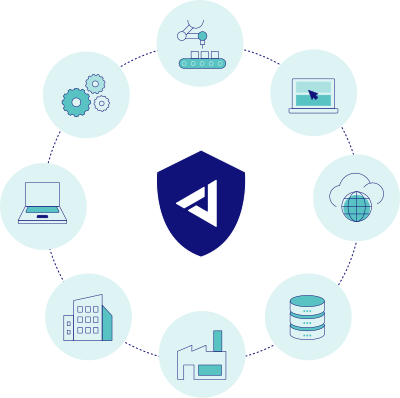
Stop trusting your network perimeter. Start verifying every user, every device, every time. Jimber’s Real Zero Trust platform delivers complete security from one console.
Frequently Asked Questions
What is Zero Trust Security?
Zero Trust is a security model based on “never trust, always verify.” Unlike traditional perimeter security that trusts everything inside the network, Zero Trust treats every access request as potentially hostile. Every user and device must prove their identity and meet security requirements before accessing specific applications, regardless of location.
How is Zero Trust different from VPNs and firewalls?
Firewalls and VPNs protect the network perimeter. Once you’re inside, access is typically broad. Zero Trust operates at the application level. Each connection is isolated and verified. Users get precise permissions for specific applications only, not entire network segments.
Can Zero Trust be deployed quickly in mid-market organizations?
Yes. Our SASE platform is cloud-native and hardware-independent. Virtual controllers can be installed in hours. Most organizations complete a full Zero Trust rollout within 2-4 weeks, typically with minimal to zero downtime by using a phased approach.
Do we need new hardware for Zero Trust?
No. Our SASE platform is hardware-independent and 100% cloud-native. For most environments, virtual controllers are all that is required. We do offer optional physical appliances for specific use cases, such as high-throughput sites or industrial OT environments.
How does Zero Trust work for remote users and hybrid work?
The Zero Trust architecture is built for the hybrid workforce. Remote users are treated with the same Zero Trust policy as on-premise users. They authenticate once and get secure, granular access only to the applications they are authorized for, regardless of their location. This completely replaces the need for clunky VPNs.
How does Zero Trust help with NIS2 compliance?
Our platform directly addresses key NIS2 requirements. We provide centralized management and logging, strict identity-based access control, and default micro-segmentation to limit the blast radius of any incident. This delivers the ‘least privilege’ access and complete audit trails required by the directive.
How do you secure agentless devices like printers, IoT, or OT equipment?
For devices that cannot run a software agent, such as printers, IoT sensors, or industrial equipment, we use our Network Isolation Access Controller (NIAC). This appliance acts as a gateway, securing and segmenting all traffic from these devices according to your central Zero Trust policy, eliminating security blind spots.
Does Zero Trust replace our endpoint security?
No, it complements it. Jimber controls who can access which applications and how. Endpoint protection (antivirus, EDR) protects the device itself from malware and threats. The two work together: endpoint security keeps devices clean, and Jimber ensures those devices only reach authorized resources with appropriate privileges.
How do you prove Zero Trust works for auditors?
The platform generates comprehensive audit trails automatically. Every access attempt includes user identity and authentication method, device details and security posture, application accessed and permission level, time, duration, and geographic location, and accept or deny decision with reason. For NIS2 and GDPR compliance, you can demonstrate least-privilege access and incident containment without manual documentation.