
SD-wan
SD-WAN for multi-site networks, made simple
A fast, secure, and resilient way to connect every branch and remote site with one cloud-managed platform that scales without complexity.
- Replace fragile links with intelligent paths
- Centralize policy and visibility in one console
- Roll out in days across locations
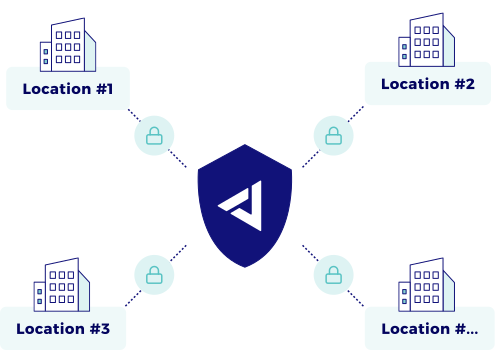
What is SD-WAN?
SD-WAN is software-defined connectivity that bonds and steers traffic across multiple links to keep applications fast and available. It replaces rigid site-to-site setups with centralized policy and dynamic path selection, so every location benefits from stable performance and strong security. With Jimber, SD-WAN lives inside one cloud-managed platform that aligns with Zero Trust principles for users, sites, and services.
Connect
Connect sites to Jimber network controllers, then register them in the cloud console.
Define
Define intents and traffic classes; SD-WAN steers flows over the best path in real time.
Secure
Enforce Zero Trust policies across links with continuous identity and posture checks.
How SD-WAN works
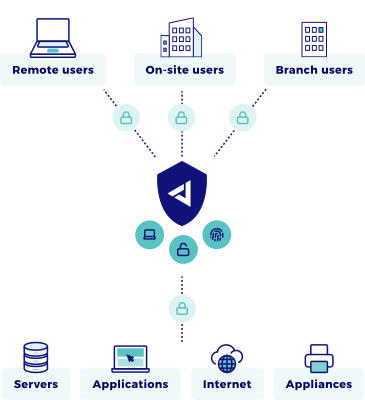
Why you should choose SD-WAN
- Resilient branch connectivity with automatic failover
- Consistent app performance during link congestion
- Fewer appliances and simpler operations
- Centralized change control and auditability
- Zero Trust segmentation across sites
Key Capabilities
- Connectivity and performance
- Link bonding and path steering: combine fiber, cable, and mobile links.
- App-aware QoS: prioritize critical traffic automatically.
- Security and control
- Identity-centric segmentation: least-privilege access between sites.
- SWG and FWaaS alignment: consistent policies for web and network flows.
- Operations
- Cloud-managed console: one place for policies and monitoring.
- API-first automation: integrate provisioning and reporting.
- Edge options
- Virtual, physical, and industrial controllers: fit branch and factory needs.
Why Jimber for SD-WAN
- Security without complexity: one cloud-managed platform, faster rollout and ops.
- Zero Trust by default: identity-based access across users, devices, and sites.
- Partner-first multi-tenant: built for MSP scale and predictable margins.
- Reliable and European: aligned with GDPR and NIS2 expectations.
See Jimber in action
Connect every location with resilient, high performance paths without complexity. Get a guided walkthrough of the cloud managed console and learn how to roll out SD-WAN with identity-centric segmentation across branches, sites, and remote locations.
FAQs about SD-WAN
How is SD-WAN different from VPN?
VPNs provide encrypted tunnels but often grant broad access and add latency. SD-WAN optimizes paths, centralizes policy, and pairs with Zero Trust for least-privilege access.
How does Jimber enforce Zero Trust across sites?
Identity, device posture, and micro-segmentation restrict each flow to the minimum required, limiting lateral movement between users, apps, and locations.
What is the impact on latency and performance?
Dynamic path selection and app-aware QoS keep critical traffic on the best link, improving stability during congestion or outages.
Can I deploy this in OT networks?
Yes. Industrial controllers and NIAC hardware segment OT from IT while preserving production traffic, without large redesigns.
What telemetry is collected?
Only the data needed for policy, performance, and security events in the console, with retention aligned to European compliance expectations.
Do I need new circuits?
No. You can start with your current mix of fiber, cable, and mobile links, then add or replace as needed.