
ZTNA Network Isolation
Isolation that makes secure access simple
Give every user and device the exact access they need. Replace VPN sprawl with identity based controls that reduce risk and keep performance high.
- Least privilege access for users and devices
- No re architecture or downtime
- Works across IT and OT environments
What is ZTNA Network Isolation?
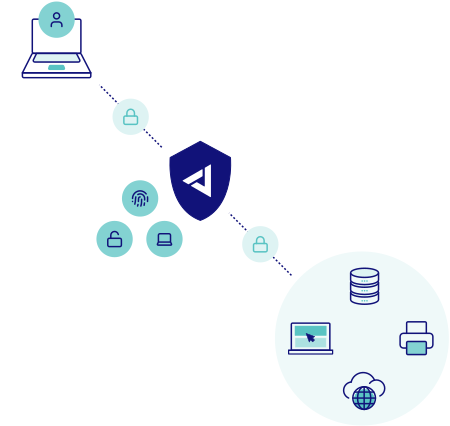
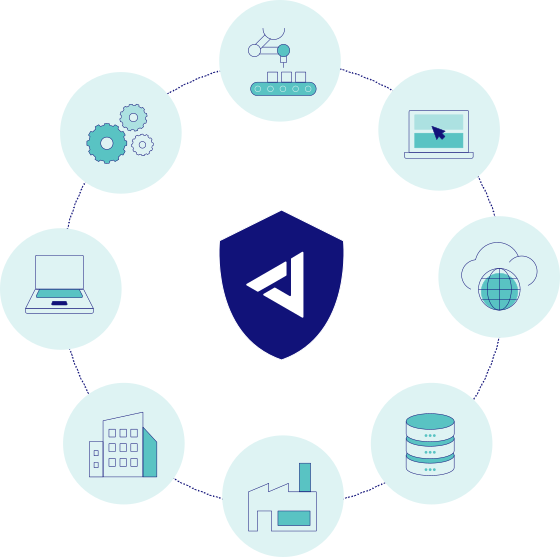
ZTNA (Zero Trust Network Access) Network Isolation applies Zero Trust to every connection so only authenticated users on compliant devices reach approved resources. Access is defined per identity and application rather than the whole network, which limits lateral movement. Policies are managed in one cloud managed console. Agentless devices can be isolated with hardware based controls for consistent protection across offices, remote workers, and industrial sites.
Identify
Identify users, devices, and resources, then map least privilege access.
Verify
Enforce identity and device posture at connect time with micro segmentation.
Isolate
Route traffic through controllers that isolate services and encrypt flows end to end.
How ZTNA Network Isolation works
Why you should choose ZTNA Network Isolation
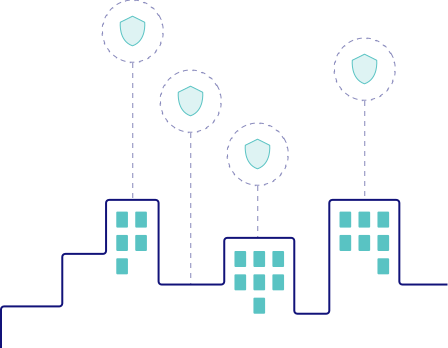
- Granular access that reduces lateral movement risk by design
- Faster remote access compared with legacy VPN models
- Central policy with unified logs for audits and NIS2 readiness
- Consistent protection for devices that cannot run agents
- Fewer sites to manage through cloud managed controllers
- Predictable rollout that fits mid market teams
Key Capabilities
- Access Control
- Identity based access: Authorize per user and app.
- Device posture check: Require compliant devices before granting access.
- Isolation and connectivity
- Micro segmentation: Segment services to contain incidents.
- Encrypted transport: Protect data in transit by default.
- Management
- Single console: Policies, logs, and monitoring in one place.
- API first control: Automate tenant and policy operations.
- Compatibility
- NIAC hardware: Isolate BYOD, IoT, and OT assets without agents.
- SSO integration: Azure AD and Google Workspace support.
Jimber, your ideal fit for ZTNA Network Isolation
- Simple rollout and operations with one cloud managed console.
- Zero Trust by default across users, devices, and services.
- Partner first multi tenant model for MSP scale and margins.
- Reliable European platform aligned with GDPR and NIS2 expectations.
See Jimber in action
Give your teams precise, least privilege access without complexity. Get a guided walkthrough of the cloud managed console and learn how to roll out ZTNA Network Isolation across users, devices, and sites.
FAQs about ZTNA Network Isolation
What is the difference between ZTNA Network Isolation and a VPN?
A VPN typically grants broad network access once connected. ZTNA Network Isolation authorizes per identity and per application, which limits lateral movement and reduces risk.
How does Jimber enforce Zero Trust?
Each connection is verified against identity, device posture, and policy. Access is granted only to the minimum required resources and re evaluated continuously.
What is the impact on latency and performance?
Traffic follows optimized routes through controllers and avoids VPN hairpins. Most users see equal or better performance compared with traditional VPN setups.
Can I deploy this in OT networks?
Yes. NIAC hardware and industrial controllers isolate agentless devices so production stays stable while access remains controlled.
What telemetry is collected?
Policy decisions, access events, device posture results, and anonymized performance metrics are logged to support audits and troubleshooting.
Does it replace my firewall?
It replaces remote access functions and micro segmentation needs. Perimeter firewalls can remain for north south controls as you phase in consolidation.
How does it handle contractors and BYOD?
Use SSO groups and device checks for managed devices. For unmanaged or agentless devices, place them behind NIAC and grant only required flows.